
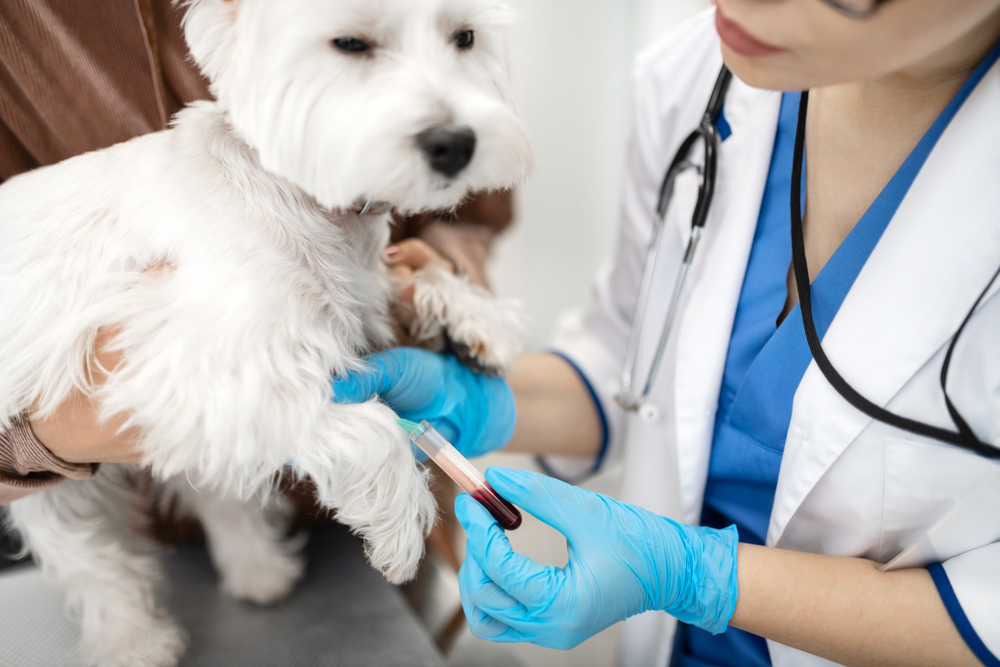
Whether your pet is healthy or sick, blood work can provide critical information about their internal health and overall wellbeing. While understanding the benefits of blood work for diagnosing a sick pet is easy, this diagnostic testing also can help us detect small changes in healthy pets months or years before visible disease signs appear.
Do I need to understand my pet’s blood work?
In short, no. Your pet’s veterinarian will review their blood work results and look for any abnormalities. Any previous “healthy” blood work will be used as a reference to look for trends or subtle changes.
If your pet’s blood work is normal, the veterinarian or a veterinary technician will let you know the good news. On the other hand, the veterinarian will discuss any notable or concerning results with you and make recommendations, if necessary.
Learning how to review your pet’s blood work is not essential, but a better understanding of your pet’s health can prepare you for any future changes.
When is blood work recommended for my pet?
At Associated Veterinary, we generally recommend annual blood work throughout your pet’s life and before any major medical event. This recommendation may vary slightly depending on the specific condition your pet may have or medications they may be prescribed. Our recommendations generally include:
- Routine wellness — We recommend a comprehensive blood panel to assess organ function and screen for anemia, infection, and early disease signs. Annual blood work also gives us a baseline to reference when your pet is sick.
- Pet illness — Blood work can help your veterinarian determine a diagnosis through obvious changes, or by ruling out suspected conditions.
- New medication — Some medications can affect the kidneys or liver, so it’s important to ensure healthy organ function before starting a long-term prescription.
- Monitoring — Periodic blood work monitors your pet’s health during medical treatment or disease progression.
- Pre surgical — Blood work ensures that your pet is healthy enough for anesthesia and allows us to customize their anesthetic protocol with appropriate medications.
- Senior pet surveillance — Blood testing can frequently detect illness in your pet before we can see any outward signs of disease. Early detection means earlier prevention and treatment.
What does my pet’s blood work include?
- Complete blood count (CBC) — The CBC measures the red and white blood cells, and can identify anemia, dehydration, infection, clotting problems, and a weakened immune system. The major values in a CBC include:
- Red blood cells (RBCs) — RBCs contain hemoglobin (HGB), which transports oxygen throughout the body. Low RBCs indicate anemia or blood loss.
- Hematocrit (HCT) or packed cell volume (PCV) — The percentage of RBCs in the blood is compared with liquid components (i.e., plasma). High hematocrit suggests dehydration, while low results suggest anemia or bleeding.
- MCV, MCH, MCHC, and RDW — These values measure RBC size, the range of RBC shapes, and hemoglobin concentration.
- White blood cells (WBCs) — WBCs fight infection, but may also increase because of inflammation, stress, cancer, bone marrow suppression, and poor immune response. White blood cell types include neutrophils, lymphocytes, monocytes, basophils, and eosinophils.
- Platelets (PLT) — Elevated platelets may indicate vessel damage during the blood draw or a hyper-clotting condition. Low results can indicate recent or ongoing internal bleeding, immune-mediated destruction, or a production problem.
- Reticulocytes (RETIC) — An elevation in immature red blood cells suggests a regenerative anemia (i.e., the body is making RBCs), while a decrease indicates a possible issue with RBC formation.
- General chemistry — The general chemistry panel provides information about your pet’s organ health, hydration, electrolyte balance, and blood glucose. The major chemistry values include:

- Kidney function — Kidneys filter the blood, remove impurities through the urine, and are responsible for triggering red blood cell production. Kidney function can change because of age, infection, toxicity, and medication use, which are reflected by changes in kidney values, including:
- Blood urea nitrogen (BUN)
- Creatinine (CREA)
- Phosphorus (PHOS)
- Calcium (Ca+)
- Kidney function — Kidneys filter the blood, remove impurities through the urine, and are responsible for triggering red blood cell production. Kidney function can change because of age, infection, toxicity, and medication use, which are reflected by changes in kidney values, including:
Because these values can also change when other organs are affected, you should speak to your veterinarian for a complete interpretation.
- Liver function — The liver helps with blood filtration and clotting, nutrient breakdown and absorption, and bile production, and regulates many critical body processes. Altered liver function may cause changes in:
- Alanine aminotransferase (ALT)
- Alkaline phosphatase (ALP)
- Albumin (ALB)
- Total bilirubin (TBIL)
- Gamma glutamyl transferase (GGT), which may indicate gallbladder disease
- Liver function — The liver helps with blood filtration and clotting, nutrient breakdown and absorption, and bile production, and regulates many critical body processes. Altered liver function may cause changes in:
- Pancreas — The pancreas is responsible for digestive enzyme storage and secretion, as well as metabolism-regulating hormone production. Changes to pancreatic values can indicate pancreatitis, diabetes, or cancer, or be caused by chronic medication use.
- Amylase (AMYL)
- Lipase (LIPA)
- Electrolytes — Like people, pets can suffer from electrolyte imbalance during fluid loss and illness. Electrolytes must stay within a narrow margin, to ensure appropriate physical function and maintain homeostasis.
- Pancreas — The pancreas is responsible for digestive enzyme storage and secretion, as well as metabolism-regulating hormone production. Changes to pancreatic values can indicate pancreatitis, diabetes, or cancer, or be caused by chronic medication use.
Dehydration—secondary to another condition—is a common cause for electrolyte imbalance, and is reflected in changes to the following:
- Sodium (Na)
- Chloride (Cl)
- Potassium (K)
Because many blood work values are interrelated, results must be viewed as a whole rather than a single value. Mild fluctuations in some values can be entirely normal and benign. If any result is cause for concern, your Associated Veterinary Medical Center veterinarian will provide a complete interpretation of your pet’s results.
Are you interested in annual blood work for your pet as part of their wellness care? Contact us to schedule an appointment.


